


Walnut liqueur – a traditional digestif from green walnuts
What is walnut liqueur?
Walnut liqueur is an aromatic spirit created by steeping unripe green walnuts in high‑proof alcohol with sugar and spices. Known in Italy as nocino, it has equivalents across Europe – Nüsse or Nüssenschnaps in Germany and Austria, ratafia in Catalonia and orahovac in the Balkans . The infusion yields a dark, brown‑black liqueur that combines bitter tannins from the nuts with sweetness from the syrup, resulting in a complex flavour that is often served as a digestif after dinner . Its alcohol content typically ranges from 24 % to 55 % depending on the producer .
Tradition and history
Nocino’s origins trace back to medieval Italy, with legends of barefoot girls gathering walnuts on the night of St. John . Walnuts were associated with luck and prosperity in Roman times and even considered to have mystical powers . Over centuries, herbalists used walnut liqueur for digestive and anti‑inflammatory purposes . Today, walnut liqueur is produced in many European regions, with each country adding local twists – citrus peel in Croatia, coffee or spices in Slovenia . Despite its folkloric roots, it is appreciated worldwide as a gourmet digestif and holiday treat.
How it’s made
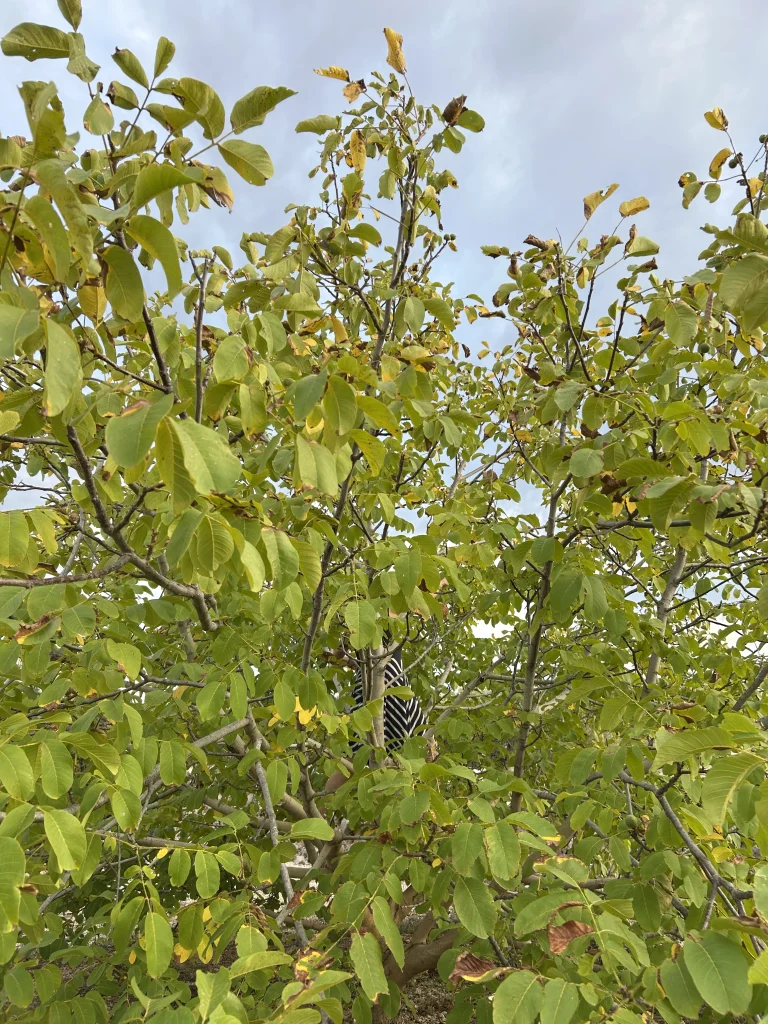
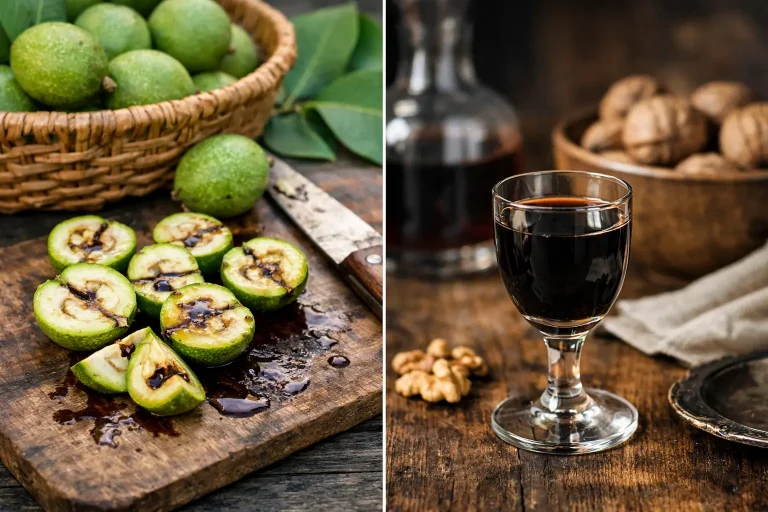
Production begins with harvesting green, unripe walnuts in early summer when the nuts are still soft. The walnuts are washed, quartered and steeped in neutral spirits or grape brandy along with sugar or honey and botanicals like cinnamon, cloves and vanilla. The mixture macerates for several weeks – Italian recipes often call for 40 days – during which the alcohol extracts tannins and essential oils . After maceration, the liquid is strained and allowed to mature in dark bottles for additional weeks or months to develop its smooth texture and balanced sweetness . Some traditional variations add lemon peel, orange, coffee beans or cocoa to enhance the nutty aroma.
Homemade vs commercial versions
Homemade walnut liqueur (often called “family nocino”) allows greater control over sweetness and spice. Families may reduce sugar for a more pronounced bitterness or add local ingredients like honey or citrus. Commercial producers aim for consistency: they use refined alcohol, standardized sugar content and controlled steeping to achieve a uniform flavour profile and regulated alcohol content. Artisanal brands often highlight regional walnuts and natural botanicals, while mass‑market products can be sweeter and more approachable.
Flavour and aroma
The flavour of walnut liqueur is complex and layered: it is nutty and spicy with a light body yet rich, earthy undertones . The initial bitterness from the green walnuts quickly gives way to a sweet finish reminiscent of caramel, espresso and holiday spices. Depending on the botanicals used, some versions exhibit hints of vanilla, orange zest or chocolate. The high tannin content provides a drying sensation on the palate, while the aroma evokes toasted nuts and autumn forests.
Serving and pairings
Traditionally enjoyed neat or slightly chilled in small glasses, walnut liqueur is a classic digestif to conclude a meal. It pairs well with chocolate desserts, nuts and cheese boards and can add depth to cocktails like the Black Manhattan or an Old‑Fashioned riff. Bartenders also use it to enrich coffee drinks or drizzle over ice cream for a gourmet touch. Its warming profile makes it popular during autumn and winter celebrations, particularly around Christmas.
Who will enjoy it?
Walnut liqueur appeals to adults who appreciate artisanal spirits, complex flavours and culinary heritage. It is an excellent gift for food lovers and a festive drink for holiday gatherings. Because of its bittersweet profile and higher alcohol content, it is typically favored by those who enjoy amari and after‑dinner drinks rather than by casual wine drinkers.
Moderate health context
Historically, orahovac was regarded as a tonic believed to aid digestion and reduce inflammation . Scientific literature notes that walnut liqueur can act as a dark, bitter aperitif or digestive aid and that its astringency relates to phenolic compounds . While these traditional associations persist, modern consumers should view it as an alcoholic beverage meant for enjoyment; any perceived benefits do not replace medical advice and consumption should remain moderate.
Frequently asked questions about walnut liqueur
What is walnut liqueur?
Walnut liqueur is a traditional spirit made by macerating green walnuts in alcohol, most commonly grape brandy or neutral spirit, with the addition of sugar and spices. It is known for its bittersweet flavour and dark colour.
When are walnuts harvested for walnut liqueur?
Walnuts are harvested in late June or early July, while they are still green and soft, meaning they can be easily cut with a knife. At this stage, they contain the most aroma and characteristic bitterness.
Is walnut liqueur bitter?
Walnut liqueur naturally has a mild bitterness due to green walnuts, but it is balanced by the sweetness of sugar or honey. A well-made walnut liqueur is not unpleasantly bitter.
How is walnut liqueur traditionally consumed?
Walnut liqueur is most often enjoyed as a digestif, in small quantities, after a meal. It is typically served at room temperature or slightly chilled.
What is the difference between homemade and industrial walnut liqueur?
Homemade walnut liqueur usually has a more pronounced walnut flavour and a more natural aroma, while industrial versions often use standardised recipes and a milder flavour profile for consistency.
How much alcohol does walnut liqueur contain?
The alcohol content depends on the recipe, but it typically ranges between 20% and 30%. Homemade versions can sometimes be slightly stronger.