


Marastina Wine – Authentic Dalmatian White Wine
Origin and Names of Marastina
Marastina is an indigenous Dalmatian grape variety and one of the officially recommended white grape varieties across Croatia’s coastal wine regions, with the exception of Istria. Historically, it was one of the most widely planted white varieties in Dalmatia and for a long time held the position of the region’s dominant white grape.
Due to its broad presence along the Adriatic coast and islands, Marastina developed several local names. On the island of Korčula it is known as Rukatac, on Cres as Krizol, while in other areas it appears under names such as Mareština, Đurđevina, and Kačebelić. This diversity of names reflects the deep-rooted presence of the variety throughout Dalmatian viticulture.
Although traditionally regarded as a native Dalmatian grape, DNA analysis has revealed a close genetic relationship with the Italian variety Malvasia del Chianti, placing Marastina within the broader Malvasia family. Regardless of scientific debate about its earliest origins, Marastina remains firmly embedded in Dalmatian wine heritage and is among the first grape varieties in Croatia to have historically protected origin and designation.
Growing Conditions and Distribution
Marastina thrives in warm, sun-exposed coastal areas and on Adriatic islands. It is found throughout Dalmatia, from the Zadar region in the north, across Hvar, Korčula and the Pelješac peninsula, all the way to the southern area of Konavle. Certain micro-locations stand out in particular, especially the Primošten area and the hinterland of Šibenik, where deeper soils allow the grapes to reach full aromatic maturity.
The variety is known for its reliable and generous yields, as well as its naturally high sugar levels, often reaching up to 24%, resulting in wines with solid alcohol levels and a softer, rounded profile. Traditionally planted for its resilience and adaptability to Mediterranean conditions, Marastina has benefited greatly from modern vineyard practices focused on yield reduction. This shift has led to a significant improvement in quality, positioning Marastina once again as a grape capable of producing serious, character-driven wines.
Characteristics of Marastina Wine
Marastina wine is instantly recognisable by its greenish-yellow to golden colour. On the nose, it reveals expressive aromas of ripe white and stone fruit, such as apple, pear, apricot and melon, often complemented by subtle citrus notes and hints of honey or nuts.
On the palate, Marastina offers a full, rounded mouthfeel with moderate to higher alcohol levels, balanced by naturally lower acidity, which gives the wine its soft and approachable character. This gentle roundness is the reason it was once described as a “feminine wine” in older wine literature. Thanks to modern winemaking techniques, today’s single-varietal Marastina shows improved balance and freshness while preserving its distinctive identity. It is best enjoyed young, within the first two years after harvest, when its fruit expression is at its most vibrant.
Serving and Food Pairing
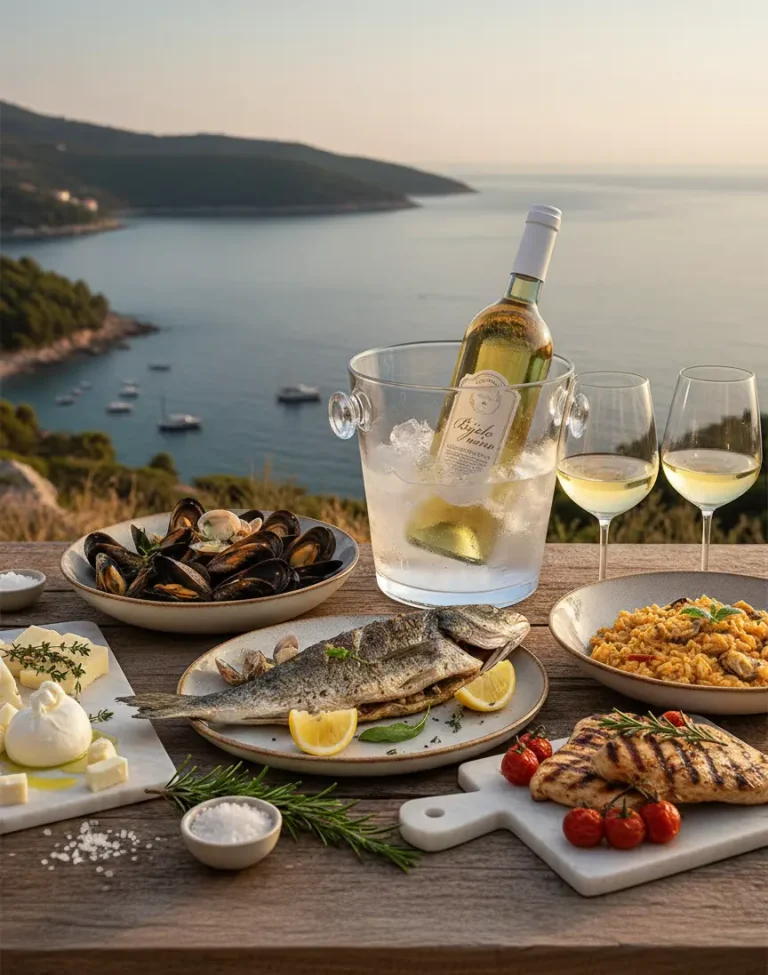
Marastina is best served chilled at around 10 °C, allowing its aromas and balance to fully express themselves. Its Mediterranean character pairs beautifully with fish, seafood, shellfish, light risottos, white meats and mild cheeses.
Saline and maritime flavours further enhance the wine’s natural fruitiness and softness, while creamy dishes complement its fuller body and rounded texture, creating a harmonious pairing at the table.
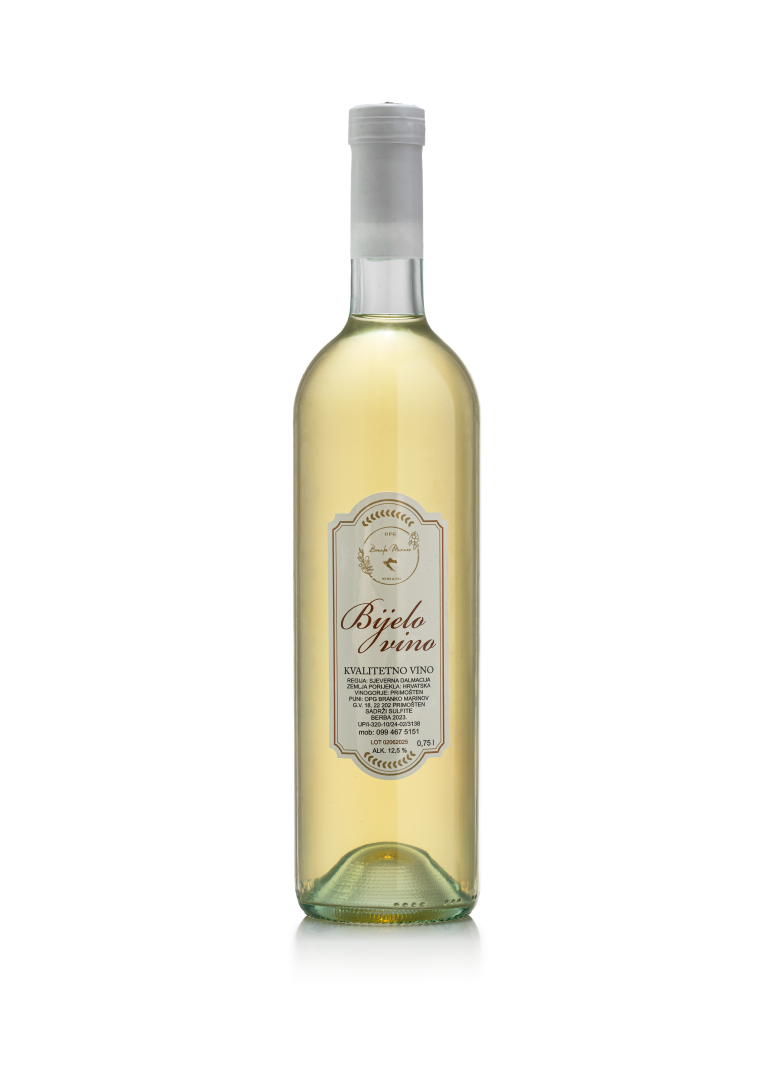
Maraština OPG Branko Marinov
In the Primošten wine-growing region, OPG Branko Marinov cultivates Marastina on sun-exposed vineyard sites and deeper red soils, conditions that are ideally suited to this variety. Carefully controlled yields and precisely timed harvests ensure grapes of optimal ripeness and concentration.
Marastina by OPG Branko Marinov is characterised by its golden-yellow colour, expressive fruit aromas of peach and melon, and a rounded, elegant palate. A soft texture, balanced structure and long, pleasant finish make this wine an authentic expression of Dalmatian terroir and the Marastina grape.
Frequently Asked Questions about Marastina
What is Marastina?
Marastina is an indigenous Dalmatian white grape variety used to produce the wine of the same name. It is known for its golden-yellow colour, fruity aromas and a soft, rounded palate.
Is Marastina the same as Rukatac?
Yes. Rukatac is a local name for Marastina, most commonly used on the island of Korčula and in parts of southern Dalmatia.
What does Marastina wine taste like?
Marastina has a full yet smooth taste, with pronounced notes of ripe white fruit such as apple, pear, apricot and melon, complemented by subtle honey and citrus nuances.
Is Marastina a dry or sweet wine?
Marastina is most commonly produced as a dry white wine, but due to its naturally high sugar content, it is also traditionally used for making Dalmatian dessert wine known as Prošek.
What food pairs well with Marastina?
Marastina pairs beautifully with fish, seafood, risottos, white meats and mild cheeses. It shows best as a light, Mediterranean wine enjoyed with food.
At what temperature should Marastina be served?
The ideal serving temperature is around 10 °C, which enhances the aromas and creates a better balance of flavours.