



Babić Wine – The Indigenous Dalmatian Red with Character
Babić wine is one of Croatia’s most authentic red wines. The grape variety Babić (pronounced ba‑bich) originates in northern Dalmatia and is deeply rooted in the vineyards around the towns of Šibenik and Primošten. Locally known by several names, it is a national cultivar valued for its extraordinary potential. Today it is grown in small plots along the Adriatic coast, but its most celebrated vineyards are the steep, rocky slopes above Primošten.
Stone Slopes and Harsh Terroir
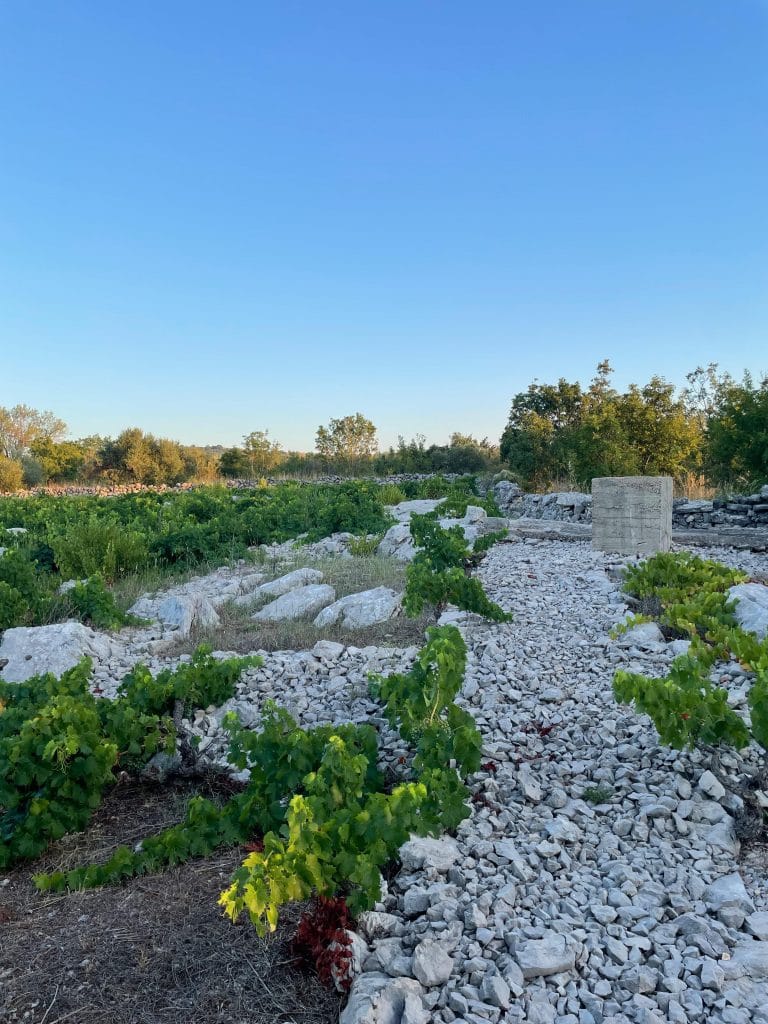
What makes Babić unique is where it grows. The best grapes come from terraces carved into the karst hillsides, where vines cling to thin pockets of soil between sheets of limestone. These “stone lace” terraces near Primošten illustrate the kind of conditions Babić needs to produce top‑quality wine. Fertile fields in the hinterland give only average wines, so Babić thrives on harsh, sun‑drenched slopes with low yields and miserly soil. Our own Babić vineyards in Jasenovik follow this tradition: they are planted on steep, stony hillsides exposed to intense sunlight and remain unirrigated, which concentrates the grapes and enhances their quality. The vines benefit from the Mediterranean climate – hot summers and mild winters – and the limestone bedrock helps balance sugar and acidity. Every bunch reflects the resilience of vines that have adapted to the winds, heat and scarcity of water.
Limited Yields and Careful Cultivation
Babić yields are naturally low because the vines struggle for nutrients in the rocky soil. Winemakers treat this grape with care, often practicing clonal selection to preserve its authentic traits. The grape skins are thick and the berries small, resulting in high concentrations of colour and tannins. Because of these conditions, production is always limited; collectors value Babić wines for their rarity and the story behind each bottle.
Taste Profile – Dark Fruit and Mediterranean Herbs
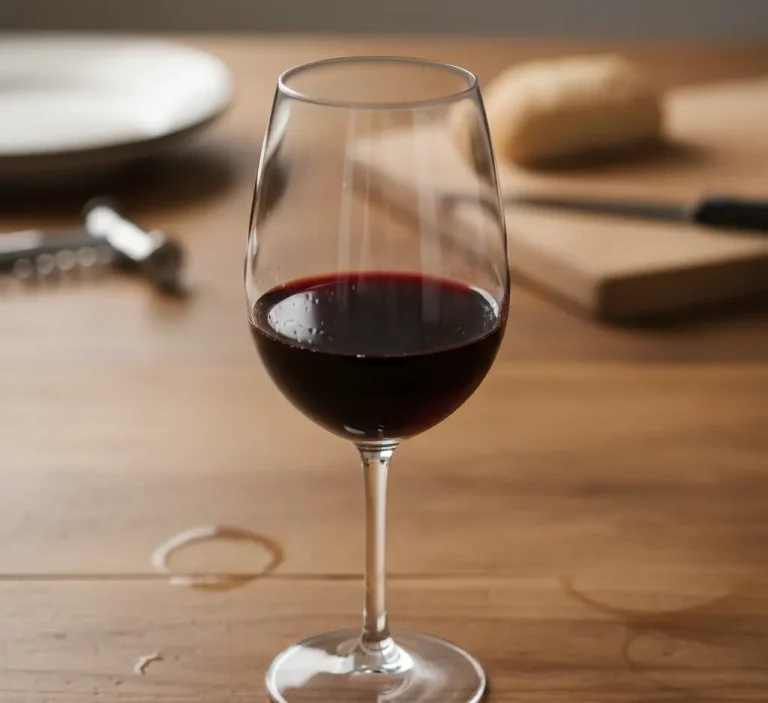
A glass of Babić is strikingly dark – deep ruby to almost black. The wine opens with aromas of blackberry, plum and black cherry, interwoven with hints of Mediterranean herbs and a subtle earthiness. On the palate, Babić is full‑bodied with a rich texture. High natural acidity keeps the wine fresh even in hot years, and its tannins are plentiful but rounded. In its youth, stainless‑steel Babić can show herbal notes and firm tannins. However, when the grapes are fully ripe and the wine spends time in oak, it develops complex flavours of spice, dark chocolate and dried fruit. Mature Babić combines power with elegance, making it a wine worth ageing and savouring over time.
Food Pairing – Hearty Dishes and Aged Cheese
Thanks to its structure and depth, Babić pairs beautifully with robust dishes. Traditional Dalmatian cuisine features lamb roasted over an open fire, slow‑cooked beef or wild game; the wine’s tannins soften with the richness of the meat. Babić also complements aged cheeses and Mediterranean pasta dishes with tomato‑based sauces. Its balanced acidity allows it to accompany hearty meat risottos and stews without overpowering them. For a simple pairing, pour Babić alongside a plate of cured meats, olives and hard cheeses – the flavours of the wine echo the herbs and salt of the Dalmatian coast.
Why Babić Stands Out
In comparison with its more famous Dalmatian cousin Plavac Mali, Babić offers greater freshness and more refined tannins. The variety retains high acidity, giving the wines a lively character even at high alcohol levels. It shines best when made as a full‑bodied wine; if produced lightly, the wine can seem thin and unbalanced. Oak ageing suits Babić particularly well, as the grape’s primary aromas are not intensely fruity; time in barrel introduces spice and rounds the tannins. With proper cellaring, a well‑made Babić can develop complexity for many years.
Micro‑Location: Jasenovik’s Signature
Our vineyard lies on the slopes of Jasenovik, a micro‑location near Primošten. These south‑facing hillsides receive abundant sunlight and are composed of barren limestone and sparse topsoil. Without irrigation, the vines drive their roots deep into the rock, resulting in grapes of exceptional concentration. The combination of intense sun and sea breezes helps the grapes ripen evenly, preserving acidity and varietal aroma. Because of the harsh terrain, yields are small and every harvest is precious. The hills of Jasenovik impart a distinct mineral note to the wine, reflecting the stone and sea of Dalmatia.
Bringing Dalmatia Home
To enjoy a taste of Dalmatia in your own home, seek out genuine Babić wine from a trusted source. Its scarcity means it isn’t widely available, but you can order directly from producers who grow and bottle this indigenous variety. Our family farm offers Babić wines crafted exclusively from the Jasenovik slopes. Each bottle is a testament to the hard work of generations who shaped the stone terraces and tended the vines by hand. If you’re curious to learn more about this remarkable grape and our winemaking philosophy, read our blog article “Babić – A Bottle with Character” on our site: Babić – A Bottle with Character. There you’ll find deeper insights into the history, terroir and future of Babić wine.
Frequently Asked Questions about Babić Wine
What is Babić wine?
Babić is an indigenous red grape variety from northern Dalmatia, grown on rocky slopes around Primošten and Šibenik, producing wines with strong character and depth.
What does Babić wine taste like?
Babić wines are full-bodied with a dark flavour profile, showing notes of blackberry, plum and Mediterranean herbs, supported by balanced acidity and smooth tannins.
Where does the Babić grape come from?
The Babić grape originates from northern Dalmatia, especially the areas around Primošten, including Bucavac and Jasenovik, where it has been grown for centuries.
What food pairs best with Babić wine?
Babić pairs excellently with rich meat dishes such as lamb, roasted beef and game. It also works well with aged cheeses and Mediterranean pasta dishes.
How should Babić wine be stored and can it be aged?
Store Babić wine horizontally in a cool, dark place with a stable temperature. When properly stored, Babić can age well and develop additional complexity over several years.