
Adriatic Coastal Road – the road that connected the coast, time, and travelers
There are roads designed to get you to your destination as fast as possible. And then there are roads that make you forget the destination altogether. The Adriatic Coastal Road belongs to the latter. It is a road where travel is never just a move from point A to point B, but an experience shaped by views, spontaneous stops, and the constant feeling that the sea is always there, just within reach.
The Adriatic Coastal Road was not built to impress, yet it does so effortlessly. It does not promise spectacle, but it delivers it again and again. That is why it is rarely described simply as a road. Instead, it is remembered as one of the most beautiful coastal drives in the world.
What is the Adriatic Coastal Road (D8) and where does it run?
The Adriatic Coastal Road, locally known as Jadranska magistrala and officially designated as State Road D8, runs along the eastern coast of the Adriatic Sea, from the northern part of Croatia all the way to the country’s southern border. With a total length of approximately 643 kilometers, it is the longest state road in Croatia and one of the most iconic coastal routes in this part of Europe.
On a European level, the road is part of the international road network and carries the designation E65, and on certain sections E70. Despite these official classifications, most travelers simply know it as the coastal road — a road of sea views, open horizons, and memories that last long after the journey ends.
The route passes through nearly all key coastal regions of Croatia, connecting towns, villages, and landscapes that have lived in rhythm with the sea for centuries. In many places, the road runs just a few dozen meters above sea level, offering uninterrupted views of the coastline, islands, and open Adriatic.
How and when the road that changed the coast was built
Although today it feels timeless, the Adriatic Coastal Road as we know it was built in the mid-20th century. Construction began in the 1950s, at a time when the idea of a continuous road following the coastline was considered extremely ambitious.
Work was carried out in demanding conditions — through rocky karst terrain, above cliffs, and with minimal machinery. Instead of cutting through the landscape, the road adapted to it. It followed the natural lines of the terrain, respected the shape of the land, and blended into the environment. This is why, even today, it feels organic, almost as if it has always belonged there.
When completed, the road represented a true revolution. It connected previously isolated coastal communities, simplified everyday life for local residents, and opened the door to tourism that would later shape the entire Adriatic coast.
Why the Adriatic Coastal Road is considered one of the most beautiful roads in the world
International media outlets and travel publications frequently rank the Adriatic Coastal Road among the most beautiful coastal drives in the world. The reason goes far beyond the beauty of the sea itself.
The road does not hide the landscape behind tunnels and barriers. It reveals it. It does not isolate the traveler, but draws them into the space. Every bend offers a new frame, every rise a new perspective, and every section a different emotional response.
Unlike highways designed purely for speed and efficiency, the Adriatic Coastal Road is designed for experience. And that is precisely where its uniqueness lies.
A road that changes the rhythm of travel
The moment you leave the highway and merge onto the Adriatic Coastal Road, the pace changes almost instinctively. Driving becomes slower, but richer. The radio fades into the background, windows roll down, and your gaze drifts from the asphalt toward the horizon.
This is not a road you drive mechanically. It demands awareness. The landscape does not allow indifference, and the road itself sets the rhythm.
The Adriatic Coastal Road through the seasons
In spring, the road feels calm and almost meditative. Olive trees shimmer silver, the air is crisp, and traffic is light. In autumn, the colors deepen, the sun sits lower in the sky, and the drive takes on a cinematic quality.
Summer brings crowds and energy. Cars, motorcycles, campers, and cyclists from all over the world share the same strip of asphalt. Despite the traffic, the road never loses its character.
Why the Adriatic Coastal Road is special to motorcyclists and road-trip travelers
Among motorcyclists, the D8 holds almost cult status. It is widely considered one of the most beautiful riding routes in Europe thanks to its flowing curves and constantly changing scenery. For road-trip travelers, it offers a perfect balance between driving and discovery.
No two journeys along this road are ever the same. Light, weather, season, and mood all shape the experience. That is why many travelers who drive it once feel compelled to return.
Primošten – one of the most striking sections of the road
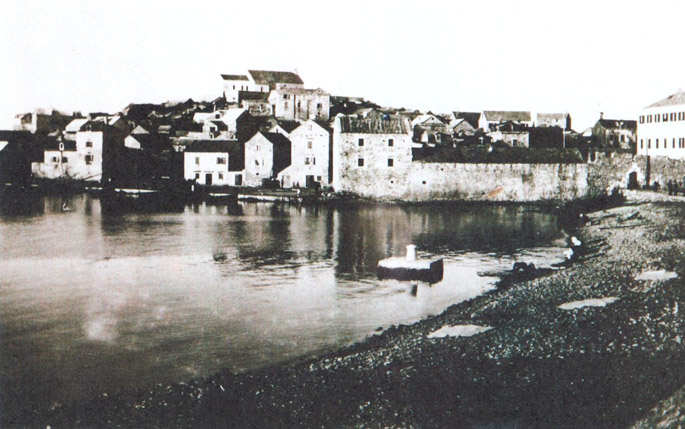
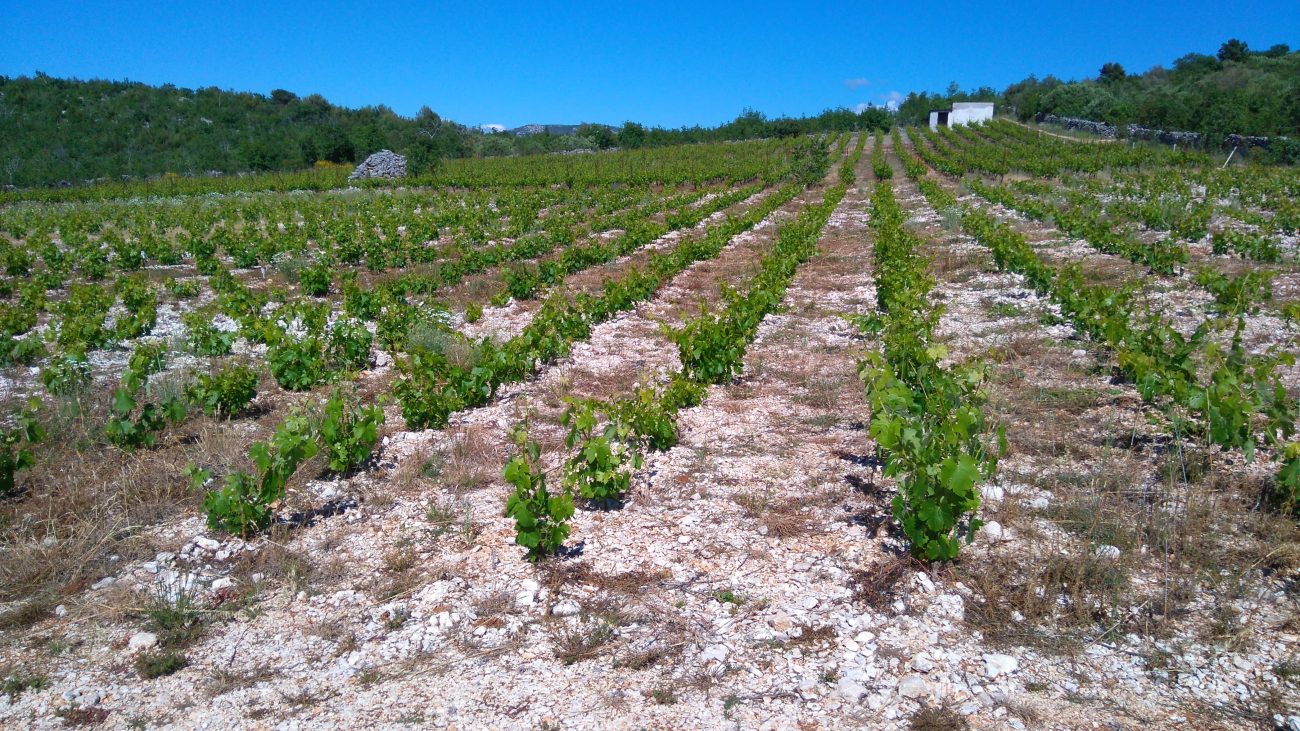
One particularly memorable section of the Adriatic Coastal Road lies in central Dalmatia, near Primošten. Here, the road gently rises above the sea and vineyards, opening views toward the old town, the famous Babić vineyards, and the open Adriatic.
It is a place where many travelers instinctively slow down. Not because they have to, but because they want to.
Where travelers stop spontaneously along the D8
Along the Adriatic Coastal Road, there are places that were never planned as rest stops, yet become so naturally. Not because of infrastructure, but because of atmosphere. Views. Silence.
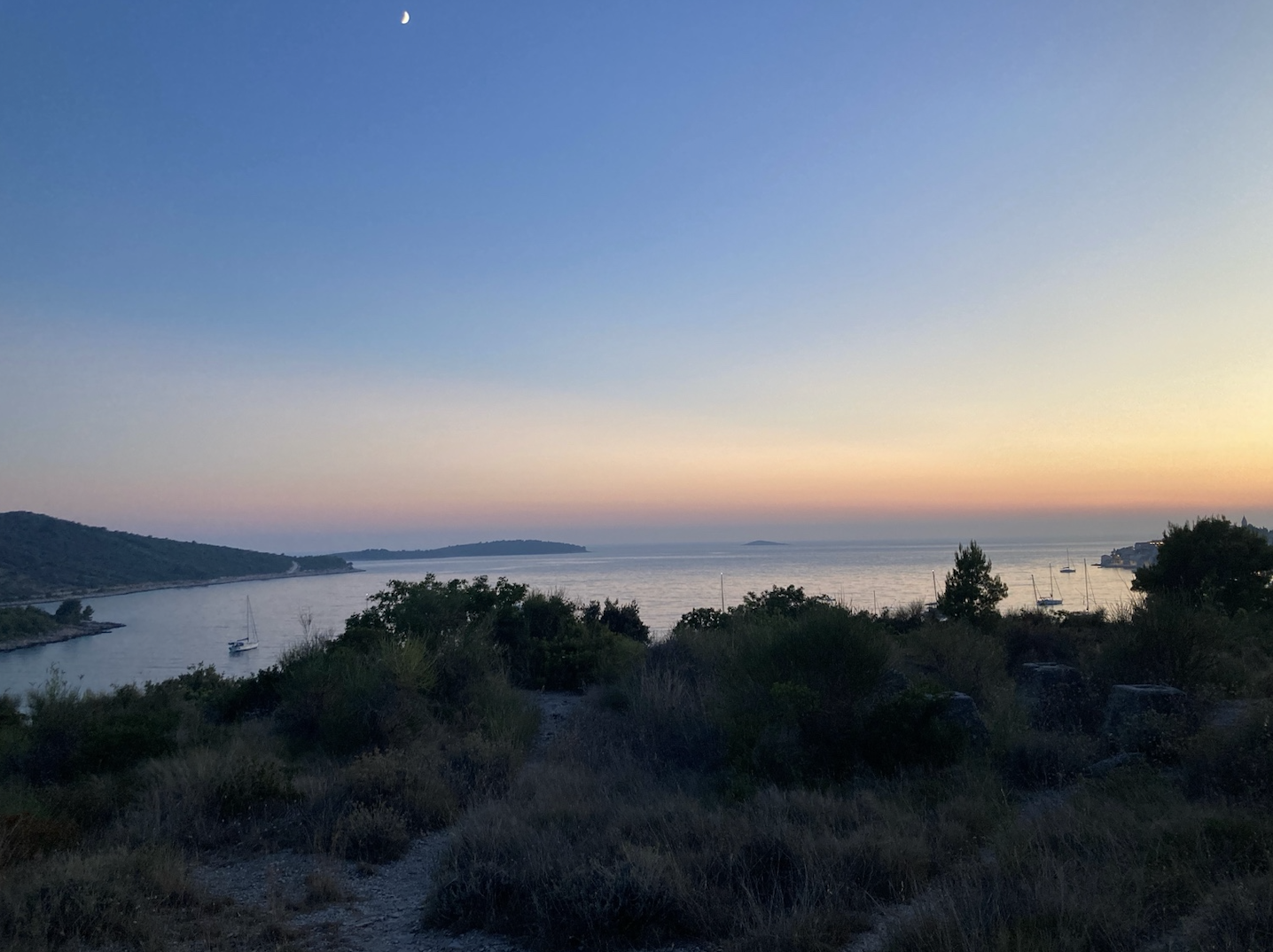
One such place lies on the section above Primošten, roughly halfway between Šibenik and Trogir. In summer, brief and unplanned pauses often happen here.
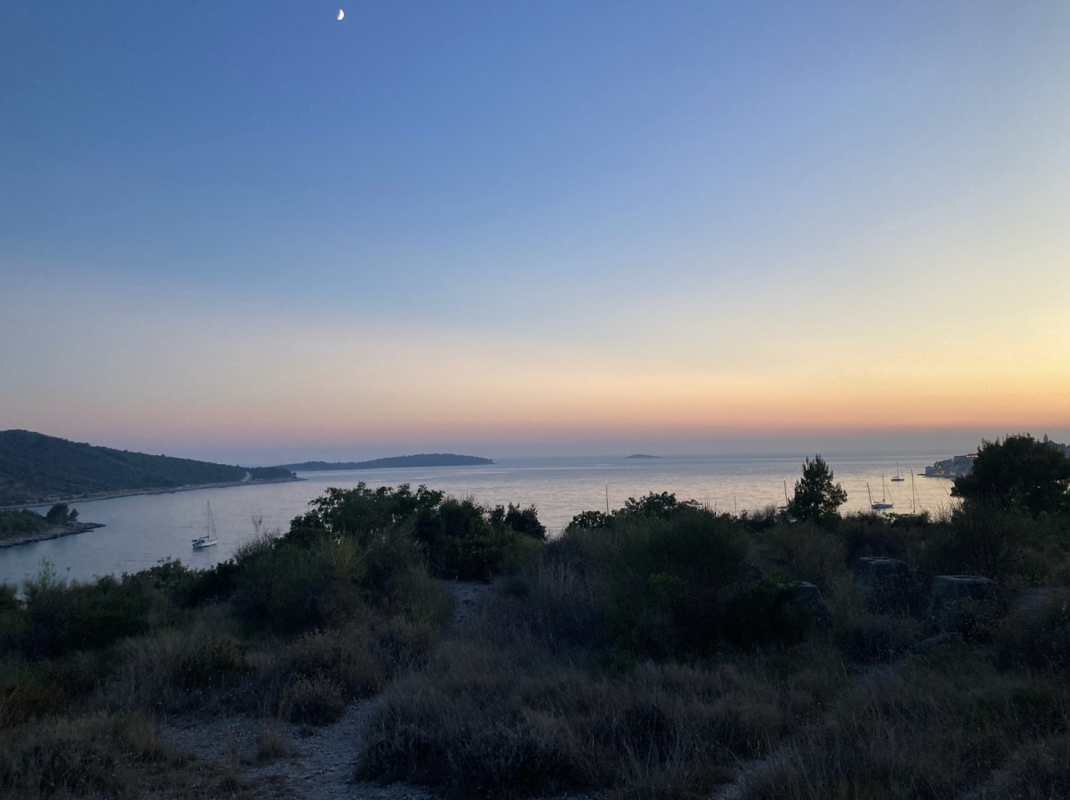
Sunset view from the Adriatic Coastal Road above Primošten, overlooking the Adriatic Sea
OPG Branko Marinov – a discreet stop along the Adriatic Coastal Road
On this section of the road, during the summer months, you’ll find a small family-run stand operated by OPG Branko Marinov. There are no loud signs and no tourist theatrics. It feels more like an extension of the landscape than a typical roadside stop.
The olive oil, wine, and rakija offered here are produced in the immediate surroundings — on the land visible from the road, under the same sun that warms the asphalt of the Adriatic Coastal Road.
Most travelers do not stop with the intention of buying anything. They stop for the view, for a break, for a moment of quiet. Only then do they notice something genuine — something that truly belongs to this place.
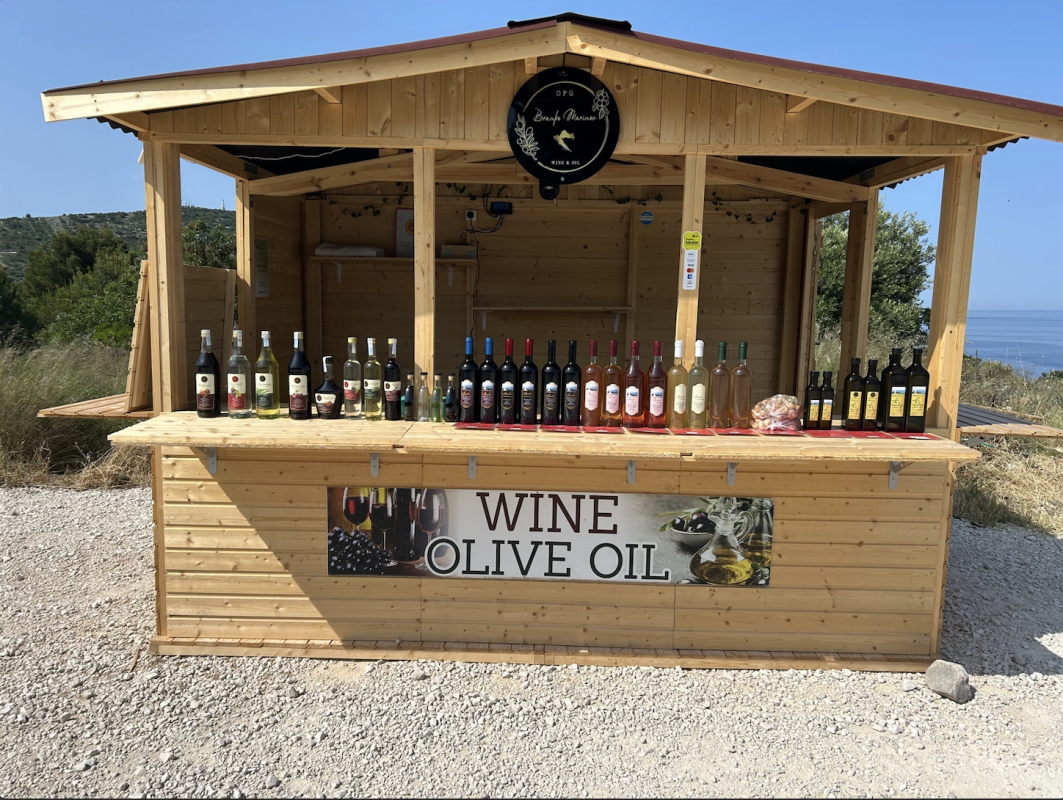
A small family-run stand along the Adriatic Coastal Road above Primošten, where travelers often stop during summer
A road as a space of encounter, not just transit
The Adriatic Coastal Road has never been just a transport route. For decades, it has been a space of encounter, exchange, and everyday life. It connected people, villages, and towns, bringing vitality to the coast.
In an age of accelerated travel, such spaces are becoming increasingly rare. That is why this road still holds a special place in travelers’ memories.
Conclusion – why the Adriatic Coastal Road stays with you
Some remember it for the curves above Senj. Others for the views of the Makarska Riviera. And some for a short pause above Primošten. But everyone shares the same feeling — that they were part of something larger than the journey itself.
Because the Adriatic Coastal Road is not a road you simply pass through.
It is a road where you stay, at least for a moment.
FAQ – Adriatic Coastal Road (D8)
How long is the Adriatic Coastal Road?
The Adriatic Coastal Road is approximately 643 kilometers long, making it the longest state road in Croatia.
Is the Adriatic Coastal Road the same as D8?
Yes. The Adriatic Coastal Road is officially designated as State Road D8.
What do the E65 and E70 markings mean?
They indicate that the road is part of the European international road network.
Why is the Adriatic Coastal Road considered one of the most beautiful roads in the world?
Because of its continuous sea views, proximity to the coastline, constantly changing landscapes, and natural integration into the environment.
Which part of the Adriatic Coastal Road is the most beautiful?
This depends on personal preference, but the section above Primošten is often highlighted for its views of the sea and vineyards.
Where can you stop along the Adriatic Coastal Road near Primošten?
Along the stretch above Primošten, between Šibenik and Trogir, travelers often stop spontaneously for views and rest.
Are local products sold along the Adriatic Coastal Road?
Yes. In certain areas, especially during summer, small family farms offer olive oil, wine, and rakija.